As the clock strikes midnight on December 31st, millions across the globe cheer, kiss, and resolve to start fresh. But have you ever wondered how this global tradition came to be? Where does New Year’s Day get its roots, and how did we arrive at January 1 as the turning point of the calendar? Let’s take a little historical journey through the lens of time and discover how this ancient celebration evolved into the dazzling spectacle we know today.
The Beginnings: A Fresh Start in Mesopotamia
The earliest recorded New Year celebrations date back over 4,000 years to ancient Mesopotamia. There, around 2000 BCE, people gathered during the spring equinox—when day and night were equal in length—to celebrate Akitu, a festival honoring the rebirth of the natural world. This was not a midnight affair but a twelve-day celebration filled with rituals, processions, and declarations of royal power. For these early civilizations, the New Year marked a reconnection with nature and the gods, ensuring prosperity in the year to come.
March or January? The Romans Decide
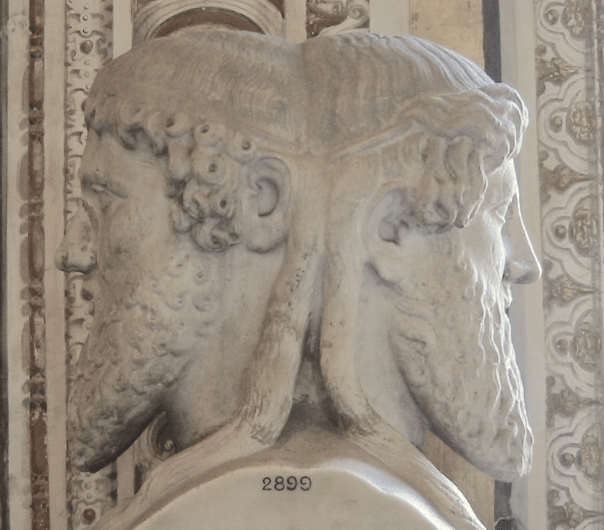
Fast forward to ancient Rome, where New Year’s celebrations were closely tied to agricultural cycles and the start of the military campaign season. Originally, the Roman calendar began in March, but in 46 BCE, Julius Caesar made a game-changing decision. He introduced the Julian calendar and set January 1 as the start of the year, aligning it with the Roman god Janus, the deity of beginnings and transitions. With two faces—one looking forward and one back—Janus became the perfect symbol of reflection and renewal. It was under Caesar’s reforms that New Year’s Day began to resemble the transitional milestone we celebrate now.
The Medieval Pause
But not everyone kept to Caesar’s plan. During the Middle Ages, many European countries shifted New Year’s Day to align with religious observances, such as Christmas on December 25 or March 25, the Feast of the Annunciation. It wasn’t until 1582, with the adoption of the Gregorian calendar by Pope Gregory XIII, that January 1 was reinstated as the official New Year in much of the Western world.
Fireworks and Global Festivities: The Modern New Year
Today, New Year’s Eve is arguably the most celebrated event on Earth. From the bustling streets of New York City’s Times Square, where the iconic ball drop draws millions of viewers, to the dazzling fireworks over Sydney Harbour in Australia, New Year’s Eve is a spectacular display of humanity’s shared joy and hope for the future. The event in Times Square, in particular, has become synonymous with New Year’s Eve, attracting over a billion virtual spectators worldwide.
In a more personal sense, many of us honor the occasion by reflecting on the past year and setting goals for the next. This tradition of New Year’s resolutions also has historical roots, dating back to the ancient Babylonians, who promised their gods to repay debts and return borrowed items at the start of their calendar.
A Moment for Reflection
As we welcome the first day of the new year, let’s take a moment to reflect on the incredible journey that has brought us here. The New Year is more than just a date; it’s a tradition rooted in history, a time for gratitude, and an opportunity to envision a brighter future. Whether you celebrated with a lively party, a peaceful evening of reflection, or by setting hopeful resolutions, remember: you are part of a tradition that spans millennia, uniting us all in the timeless spirit of renewal and possibility.
I spy with my historical eye… an ancient festival, a Roman god, and a glittering ball descending in Times Square. History reminds us that no matter how different we are, the New Year unites us in a collective celebration of hope, renewal, and connection. Happy 2025!
 I spy with my historical eye