Last summer Tokyo was the centre of the sports world, this winter it will be Peking with the Olympic Games. Seeing the athletics, feeling the release or the disappointment when the race is over, I wonder how it all started.
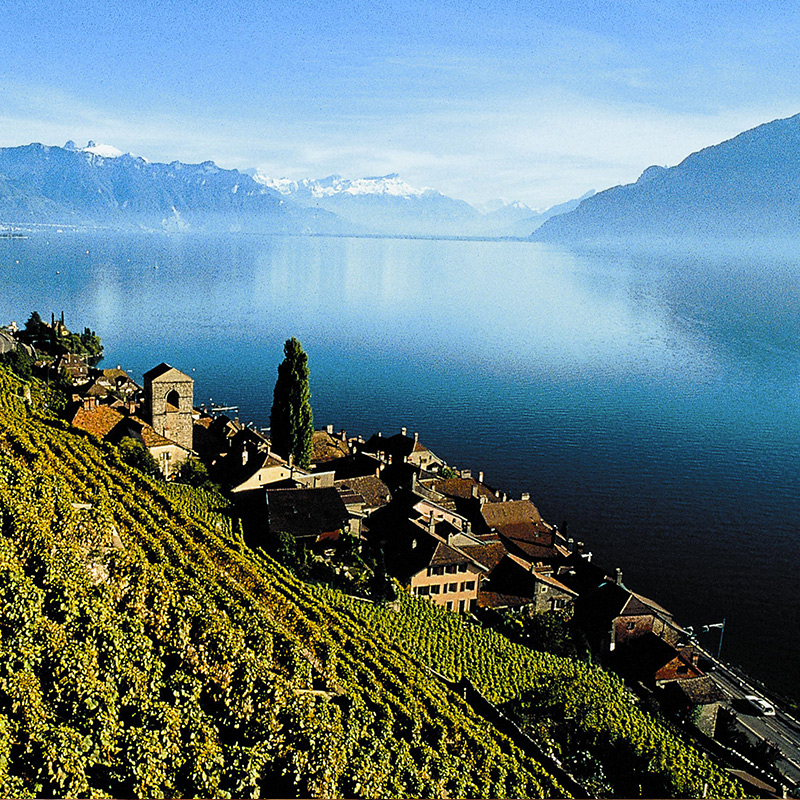
Lausanne, the city at the north side of the beautiful lake Geneva, where you can see the morning mist, the surrounding mountains in a mirror on the lake. Next to the UNESCO world heritage side of the vineyards in the Lavaux region, is the city of the Olympics. But how became this French-speaking Swiss city the Olympic city?
If there is an opportunity to go to Lausanne and visit this city you should go to the Olympic museum. There you can learn about the history of the Games, admire sporting sculptures and relive iconic Olympic moments. It also shows who were the founders of the modern Olympics and why the IOC is in Lausanne. But if there is just no opportunity to go, just keep reading, I tell you the highlights of what happened, for more than 100 Years ago.
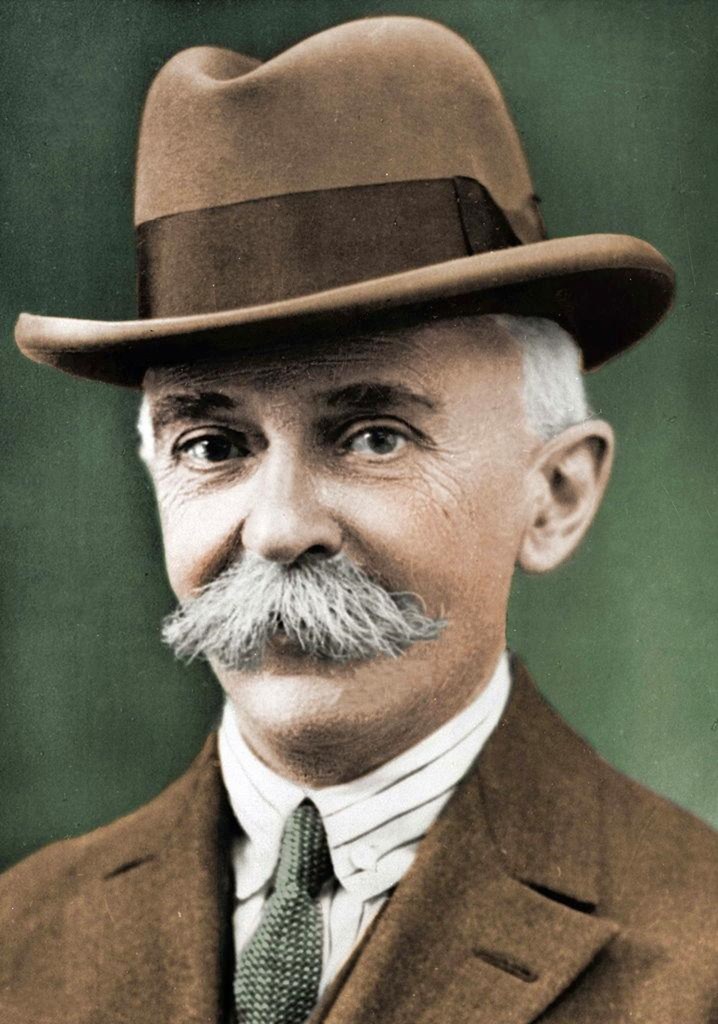
One of the driving forces behind the idea of the modern Olympics was a French baron called Pierre de Coubertin (1863-1937). He studied Political Science and developed a keen interest in both History and Education. In his spare time he played sports such as rowing, tennis and cycling. Coubertin visited different schools in England, America and Canada, where he saw the incorporation of sports into school life. In England, he met Dr William Penny Brookes, founder of the Much Wenlock games, an Olympic style yearly sporting competition. Coubertin agreed with Brookes’ ideas that sport should be a part of education rather than just a recreational activity. He tried to implement sports in the French school system, which was not a success. Coubertin still adopted Dr William Penny Brookes’ idea to establish a multi-national and multi-sport event.
The Baron was one of the founders of the International Olympic Committee (IOC) in 1894, leading to the first modern Games in Athens in 1896. 14 nations, 241 athletes, took part in these games. 65 percent was Greek, others came from European countries or the United States of America. It was a success. In 1900, the games took place in Paris the home city of Courbertin, it was also part of the century festivities. The next games were in 1904. Then the American people were the host and could enjoy the athletics in St. Louis.
In 1906, after the difficulties encountered in organizing the Games in 1900 and 1904, he wrote: “If, one day, a New Olympia is to be established somewhere in Europe, it is most probably on the shores of a Swiss lake that its buildings will rise.” He therefore began looking for a long-term solution. Why not, he thought, create a permanent site to host the Olympic Games? He initially set his sights on Morges, a town situated near Lausanne, and began work on the project, designing plans for the Olympic Stadium, the Olympic Village and the canteen. But the project never materialized, among other reasons, after encountering opposition from International Olympic Committee (IOC) Members who wanted to continue to hold the Games every four years in a different city around the world.
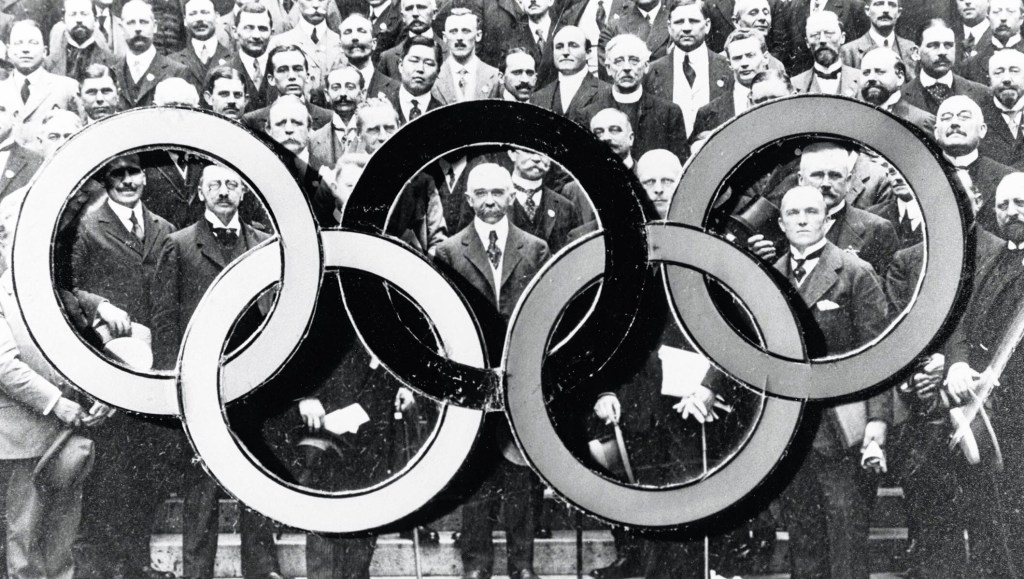
Nevertheless, Coubertin remained very attached to the Lausanne region and the Canton of Vaud. In 1914, shortly after the Olympic Congress in Paris, where he presented the emblem he had designed – the five interlocking Olympic rings, representing all the continents united by Olympics – a deadly conflict broke out in Europe and soon spread throughout the world. The First World War interrupted the Games cycle, and Coubertin decided to leave Paris and find a neutral territory in which to establish the IOC headquarters. The French Coubertin was very much taken with Lausanne, so he opted naturally for Lausanne. In April 1915, he met the Mayor of the city, Paul Maillefer, and premises were assigned to the relatively young international institution in the Casino de Montbenon, overlooking the city. On the 10th of that month, a ceremony was held at the town hall to formalize the IOC’s establishment in Lausanne. In the 1906 Olympic Review, Coubertin hailed Switzerland as the “queen” of sport and declared that the country would “become the point of convergence for global sport” and in 1915 by formalizing IOC in Lausanne he accomplished that not only he, but the world would start to see Lausanne as the Olympic city.
The spirit of the founders is still sensed by the athletics, even if they have to cope with the corona measurements. Let see how they preform, I’m already looking forward to feeling that excitement. The Olympic Games are originally from Greece, but there had never been modern Olympics if it wasn’t for the French man who loved the city on the north side of the lake Geneva and the beautiful landscape of Switzerland…..
 I spy with my historical eye