Each June, World Heritage Days in Switzerland offer a chance to step outside, slow down, and see our surroundings with fresh eyes. They encourage us to look — really look — at the buildings, streets, and skylines that quietly shape our everyday lives. I chose to travel to Bern, Switzerland’s often-overlooked capital, where cobblestones speak in centuries and sandstone arcades stretch like open arms. Bern’s inner city has been a UNESCO World Heritage Site since 1983; let’s discover together why it deserves that recognition.
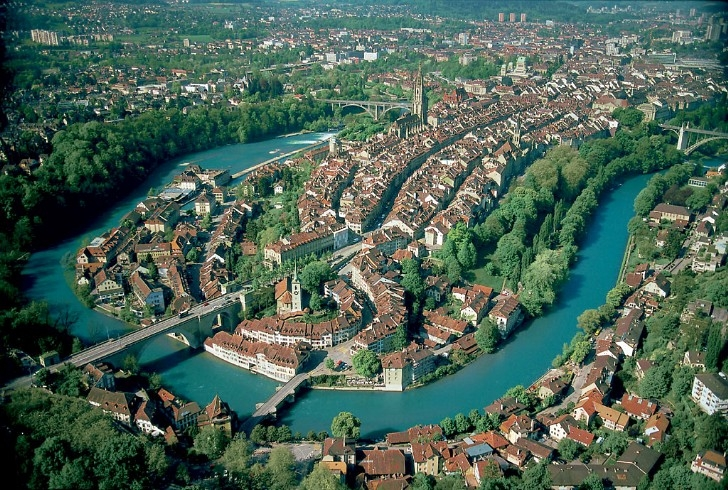
A City Caught in Time
Bern’s old town lies curled within a graceful bend of the Aare River, like a hand holding something precious. Founded in 1191, the city was built with clarity and purpose: wide streets in a linear layout, practical yet elegant houses, and arcades that sheltered merchants and citizens alike. After a great fire in the 15th century, the city rebuilt itself in local sandstone — warm grey-gold hues that still glow at sunset.
But Bern’s inclusion on the UNESCO list is not just about good looks. It’s about continuity. Despite being a modern capital, Bern has preserved its medieval bones. The street plan, arcades (known locally as Lauben), and civic fountains remain remarkably intact. Unlike many historic centers that were reshaped by war, industry, or tourism, Bern has kept its original rhythm. It is a city that breathes its history, quietly and confidently.
What UNESCO Saw
When UNESCO inscribed Bern, it highlighted not just its preservation, but its living heritage. The old town is not a museum — people live, work, shop, and argue here. Bakers start early under vaulted arcades, cyclists dodge café tables, and the Zytglogge — the iconic 13th-century clock tower — still marks time with its mechanical figures, gathering small crowds every hour.

Bern met UNESCO’s criteria for its exemplary urban planning from the medieval period, the consistent use of local materials, and the harmonious evolution of the city over centuries. The blend of Gothic, Renaissance, and Baroque elements — all filtered through Bern’s pragmatic style — creates a unity that’s both rare and beautiful.
In Good Company: Bern and Other UNESCO Cities
Walking through Bern, I began to wonder: how does this quiet Swiss gem compare to other European cities on the UNESCO list?
Take Amsterdam, for instance. Its 17th-century canal ring—a masterpiece of hydraulic engineering—shapes the city in a way entirely different from Bern. Where Bern grew organically around its medieval core, hugging the contours of a river bend, Amsterdam was carefully plotted, its waterways forming concentric arcs outward. One feels like a city responding to the land; the other, a city determined to master it. Bern invites you to wander beneath its arcades, while Amsterdam lures you across its bridges.
Then there’s Bruges, wearing its medieval past like a storybook illustration. It, too, was shaped by trade, its fortunes rising and falling like the tides. But Bruges bursts with pointed gables, tight alleyways, and canals reflecting the sky. Bern, by contrast, feels broader, steadier, more grounded—less concerned with charm, more committed to enduring.
Salzburg tells another tale, its Baroque skyline soaring in theatrical grandeur. Mozart’s city flourishes with domes, spires, palace gardens. Bern lacks that overt drama. It does not sing in gilded flourishes; it hums in sandstone rhythm, its beauty found in the quiet arc of an arcade, the solidity of a fountain plaza. One city revels in performance; the other thrives in quiet resilience.
Lucca, in Tuscany, offers yet another contrast. Renaissance walls encircle it, offering protection, intimacy. Lucca invites you to cycle atop those walls, where views stretch far beyond its borders. Bern, by contrast, embraces the intimacy of arcades, drawing you inward rather than outward. Two expressions of human-centered design, each shaping the way people experience space.
And then there is Dubrovnik, the stone fortress by the sea. A city of high walls and watchful towers, where history is carved into limestone battlements. Bern never needed walls so imposing—its river served as a natural moat. Dubrovnik is a place of grandeur and defiance, where every street seems to tell of siege and survival. Bern, in its quiet continuity, whispers something else: a city designed to endure, not to impress.
Layers of Time, Still in Use
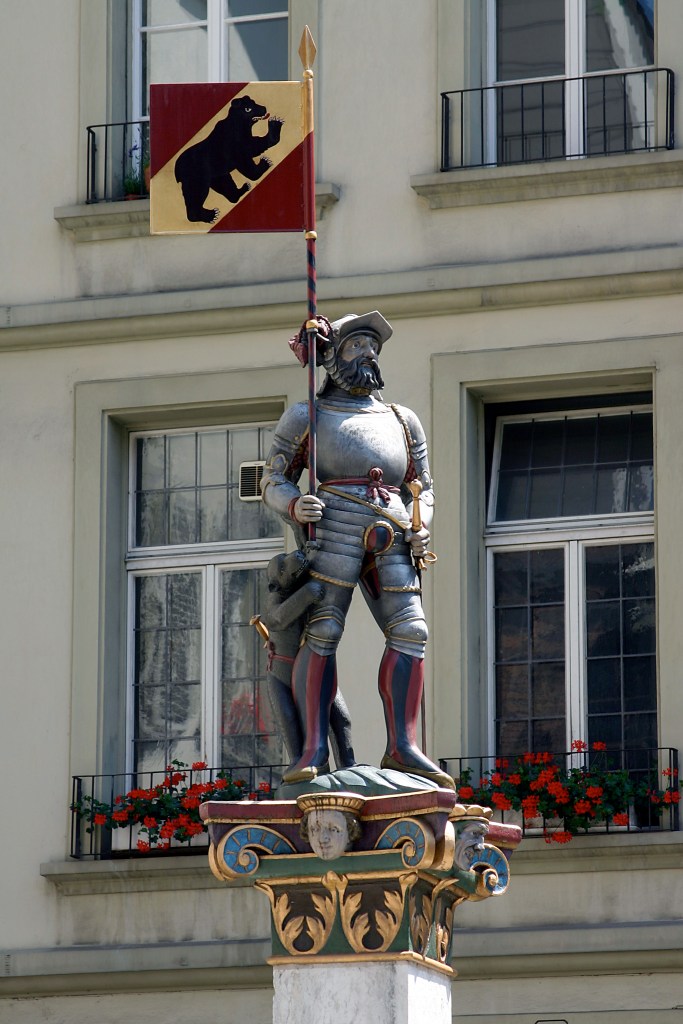
The beauty of Bern is in the details. A small face carved into a column. A Renaissance figure on a public fountain, sword drawn mid-story. A painted sign above a butcher’s shop, unchanged for generations. These elements don’t cry out for attention — they wait to be noticed.
During the Swiss World Heritage Days, guided walks and pop-up exhibitions help tourist and residents see their city with fresh eyes. History is not something distant — it is underfoot, overhead, and all around.
Living With Heritage
Bern reminds me that world heritage isn’t about locking cities in time like museum pieces. It’s about continuity, the art of living with history, preserving its essence while allowing to it to evolve. The challenge, and the beauty, is maintaining its soul while adapting it to remain vibrant and useful.
In Bern, heritage is not fenced off. It’s not ticketed or narrated. It is walked on, lived in, and passed through daily. And maybe that’s the quiet power of this city. It doesn’t shout about its significance. It lets you discover it slowly, with each step under those long, whispering arcades.
As I wandered through its timeworn streets, I understood what UNESCO saw in this place — and perhaps even more. World Heritage Day or not — if you’re in Switzerland, come check out Bern. It’s not a city that shouts for attention. But once you start looking, you’ll understand why UNESCO put it on the list. And once you’ve seen it, I’m sure you won’t forget the city of Bern.
 I spy with my historical eye