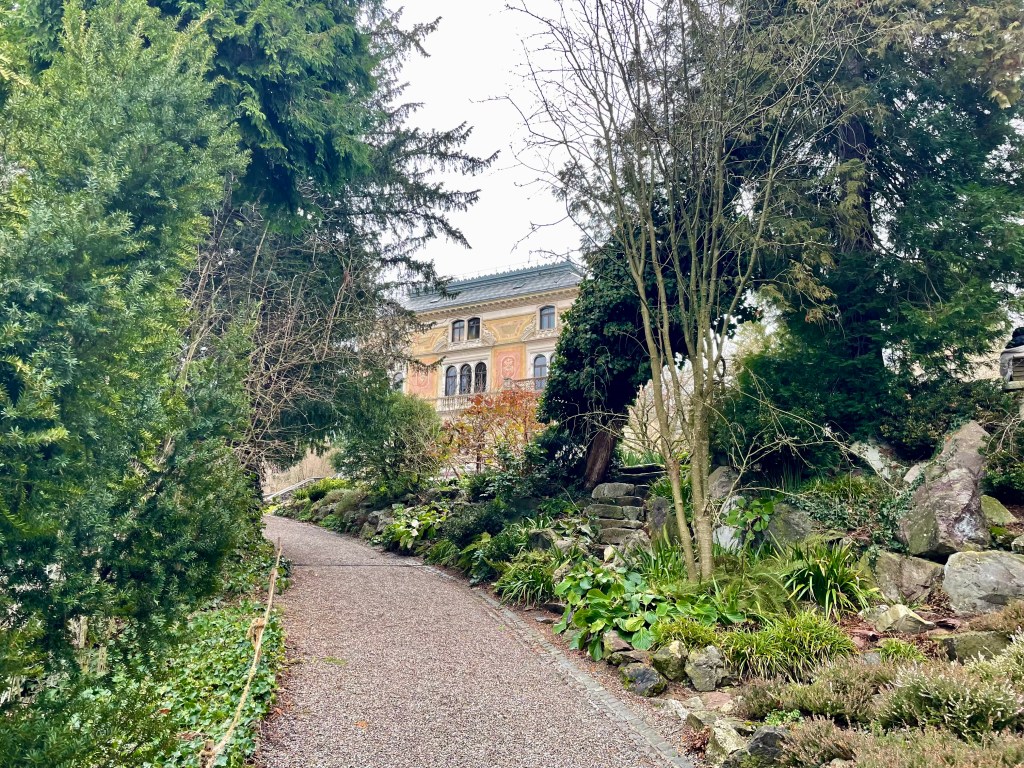
Nestled in Zurich’s Seefeld district, Villa Patumbah stands as a testament to 19th-century grandeur and eclectic architectural design. In an oasis of quietness and peace, a park with a villa, with architecture that looks like a renaissance Italian palazzo and certainly doesn`t look Swiss to me. But maybe except for the carriage house in the traditional chalet style. The main building and a passage to the carriage house have exotic details. It has Tygers as ornaments, fruit that didn’t grow in Zurich, while this house was built in 1883-1885. It is a building that makes me curious, what is the story behind it?
Today, this architectural jewel is home to the Swiss Heritage Center, which offers visitors a glimpse into its physical beauty and rich cultural layers. But behind its grandeur lies a story that traces back to the 19th century, when a visionary mind first brought this extraordinary creation to life.
Who made all of this.
Karl Fürchtegott Grob (1830–1893) was a Swiss tobacco planter and one of the wealthiest men in Zürich of his time. Born into a baker’s family, his turbulent youth led to his removal from public school. After completing a commercial education, he moved to Messina in 1858, where he met Hermann Näher, his future business partner.
In 1869, Grob and Näher traveled to Sumatra, initially managing nutmeg gardens before establishing their own tobacco plantation under the name “Näher & Grob.” In 1871, they leased 5,000 hectares of land from the Sultan of Serdang, expanding their holdings to 25,000 hectares within a few years. Their vast fortune was built on the labor of thousands—2,500 Chinese workers and 1,800 laborers from Sumatra and Java—who worked hard under harsh conditions for minimal pay. At the time, in Europe, few questioned the human cost behind such wealth, whether out of ignorance or willful disregard. The exploitation and suffering that enabled fortunes like Grob’s were rarely acknowledged.
By 1879, Grob had returned to Zürich, marrying Anna Dorothea Zundel in 1881. Two years later, he purchased a 13,000-square-meter property in Riesbach, a suburb of Zürich, where he commissioned Villa Patumbah, designed by architects Alfred Chiodera and Theophil Tschudy. This grand residence stood as a monument to his extraordinary wealth and experiences in Southeast Asia, leaving a lasting imprint on Zürich’s architectural and cultural landscape. Today, however, we take a broader perspective on such histories, appreciating the architectural significance of the villa while also recognizing the changing understanding of how its owner’s wealth was accumulated.
A villa in Historismus style
This architectural jewel is anything but a pure representation of a single style. Instead, it is a grand display of historicism, where Renaissance elements are mixed with Gothic, Rococo, Swiss Heimatstil, and Jugendstil flourishes. The Swiss architects Alfred Chiodera and Theophil Tschudy masterfully combined these influences, creating a residence that is as visually captivating as historically layered.
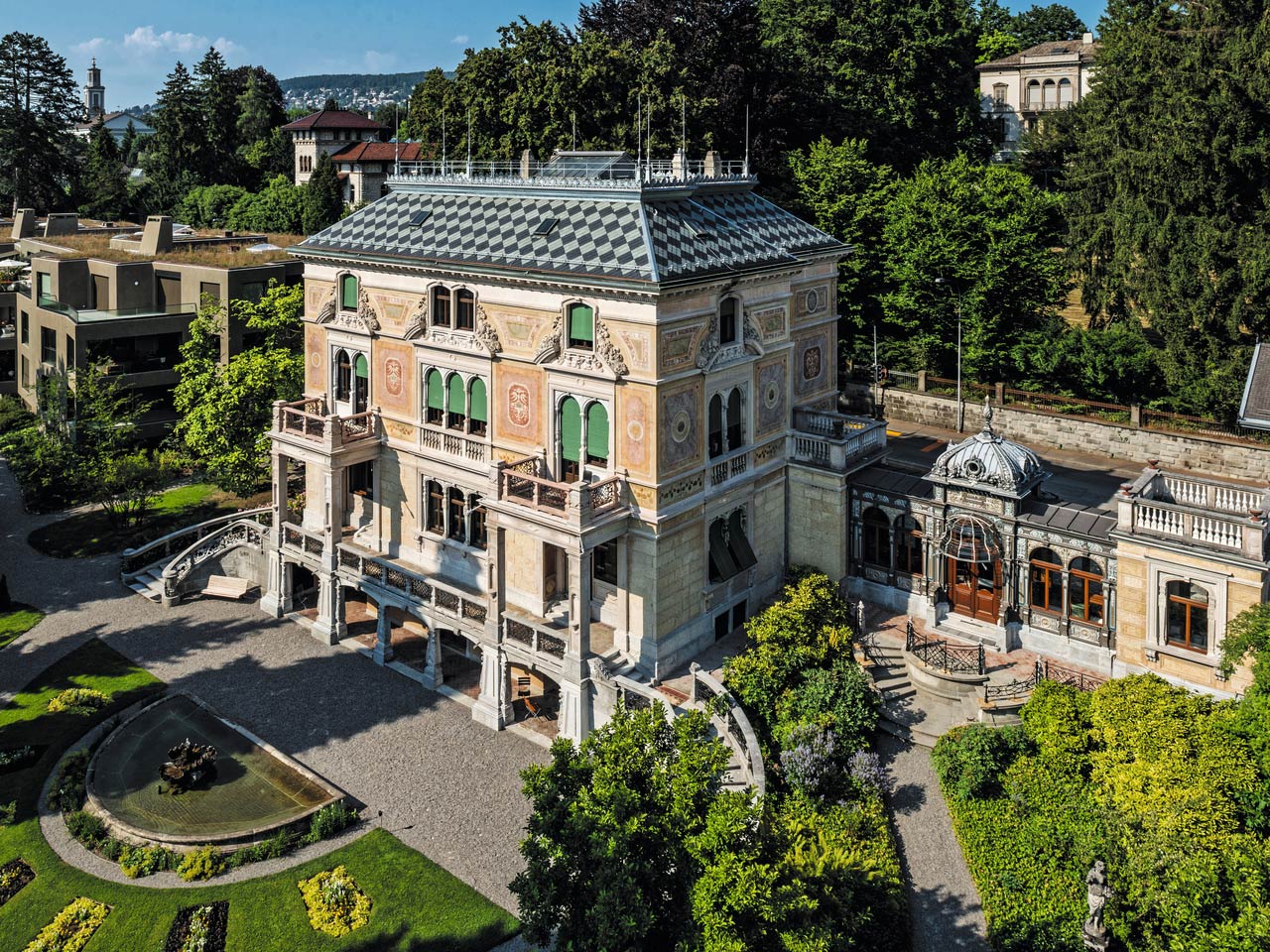
The exterior of the villa is an impressive example of eclectic 19th-century architecture, combining elements from multiple styles. The Italian Renaissance influence is evident in its emphasis on symmetry and grandeur, while Swiss Chalet-style details showcase the craftsmanship of local artisans. Additionally, subtle Southeast Asian influences reflect Karl Fürchtegott Grob’s background in plantation wealth. From the grand columned loggia to the intricately designed balconies, the villa embodies the architectural trends of a globalized era. While photographs provide a glimpse into its design, experiencing the building in person offers a deeper appreciation of its craftsmanship and historical significance.
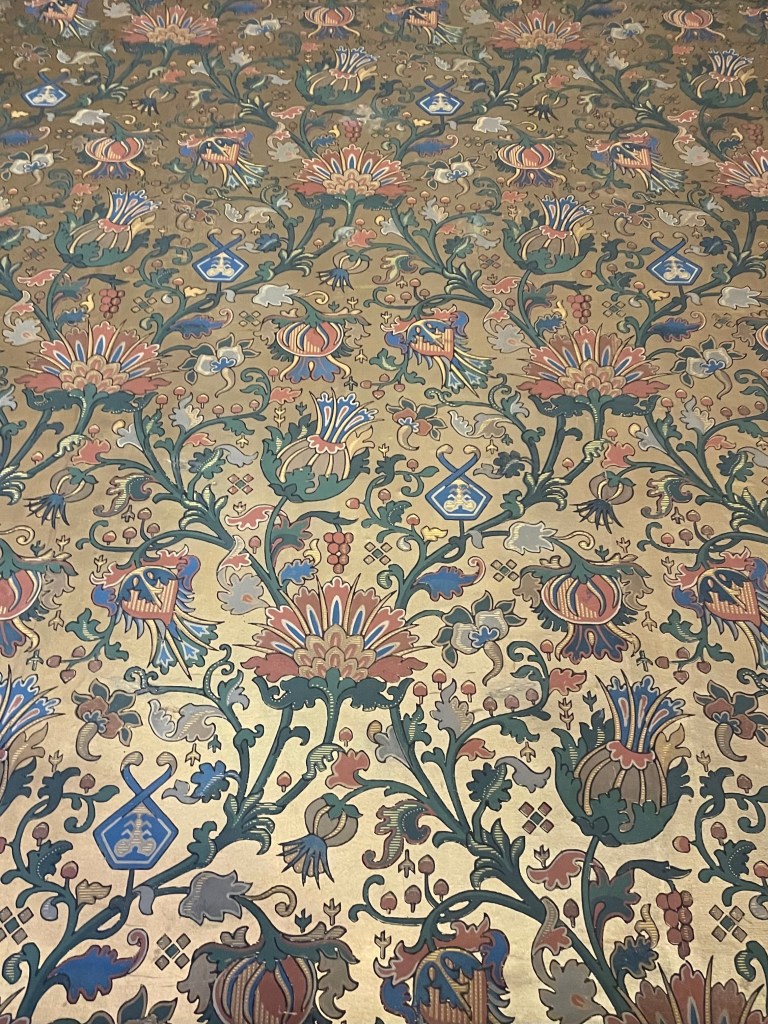
The interior of Villa Patumbah reflects the same level of craftsmanship and stylistic diversity as its exterior, featuring details created by both Swiss artisans and specialists from beyond the Alps—an exchange facilitated by the opening of the Gotthard Tunnel in 1882. Upon entering, visitors are greeted by a grand vestibule adorned with mosaic flooring and marble-clad walls, setting the tone for the villa’s opulence. Moving further, the salon showcases rich walnut panelling and fine marquetry, highlighting the exceptional quality of 19th-century woodwork. From there, the route continues through the dining room, where beautifully decorated wallpaper enhances the space, before leading to the Damenzimmer, a Rococo-style ladies’ room featuring a beautifully painted ceiling. The highlight of the interior is the dome gallery on the upper floor, designed with an Asian-inspired theme. Its vibrant colours, Chinese script, and stained glass make it an unmistakable reflection of Grob’s connections to Southeast Asia. Each room within the villa illustrates the eclectic design approach of the late 19th century, blending European and global influences into a unique and historically significant residence.

Last but not least, the garden of Villa Patumbah reflects the same global influences found in its architecture and interior. Designed in 1890 by landscape architect Evariste Mertens, it follows the principles of an English-style garden, creating a lush retreat that merges historical influences with botanical curiosities. A striking feature is the fountain, adorned with clam shells sourced from the Indo-Pacific Ocean, a subtle reminder of the far-reaching trade networks of the time. The garden also includes an Alpengarten, introducing Swiss mountain flora into the setting, alongside rosebushes and tobacco plants, which serve as a quiet reference to the industry that funded the villa. Completing the ensemble is a glass and cast-iron garden pavilion, an example of late 19th-century innovation in both materials and design. Together, these elements create a landscape that, much like the villa itself, tells a story of wealth, influence, and the interconnected world of the late 19th century.
While the villa’s grandeur is undeniable, its origins also remind us of the human cost behind such wealth—an aspect that was largely ignored in its time. Today, it stands as both a cultural landmark and a conversation piece about the past.
If you’re in Zürich, don’t miss the opportunity to experience Villa Patumbah firsthand. The Swiss Heritage Society offers guided tours every Thursday at 12:00—an invitation to step back in time and uncover the many layers of this extraordinary place.
 I spy with my historical eye