As a teenager, I often found myself looking back—not out of fear, but to reassure myself that I could find my way again if needed. This habit stayed with me, becoming a small ritual whenever I arrived in a new place. Stepping off a train, I always took a moment to study the station facade. It was a practical habit, but it also helped me feel more connected to the unfamiliar surroundings.
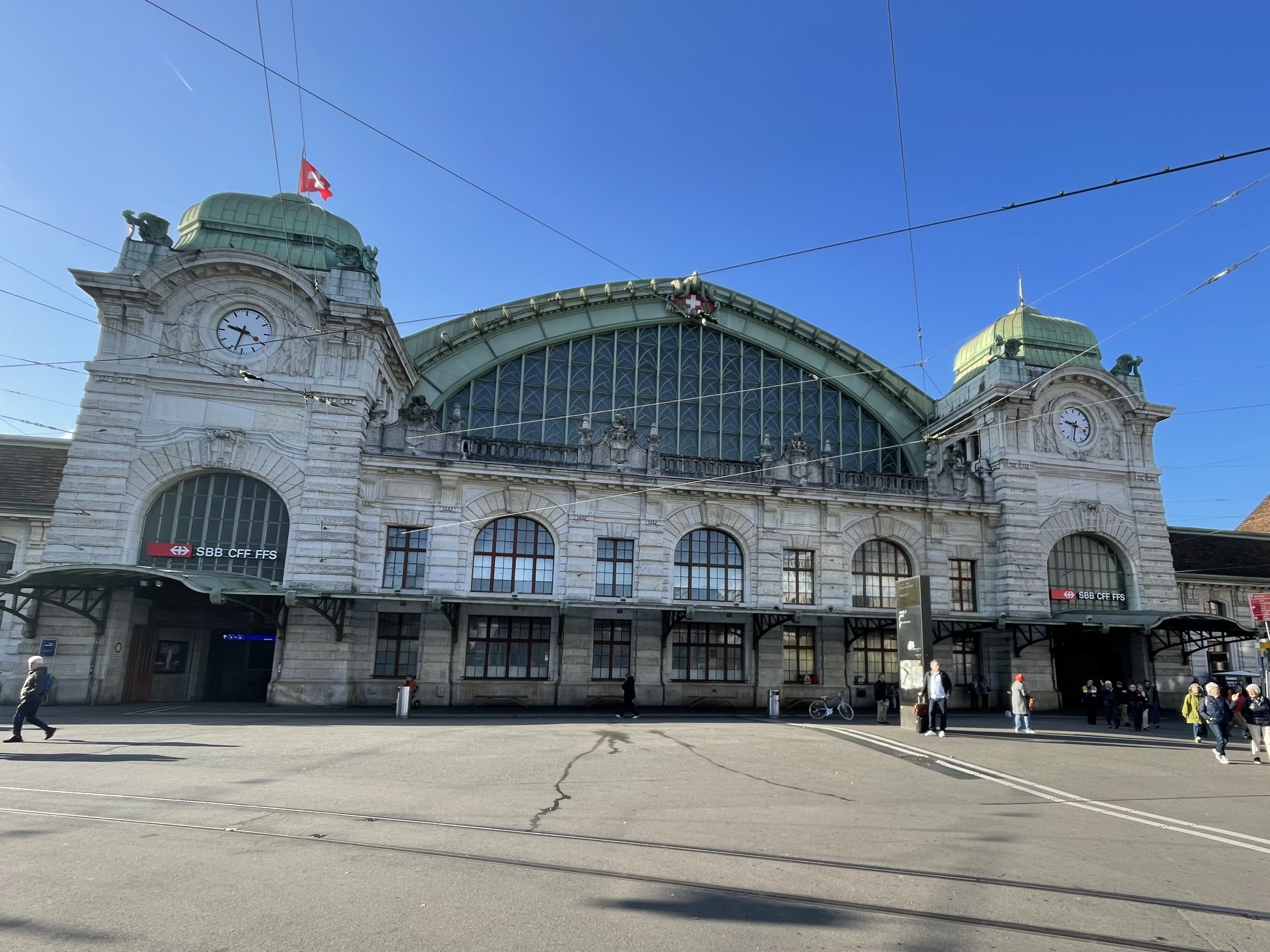
On a recent trip to Basel, I arrived at the SBB Bahnhof, the city’s main train station, and followed my routine. The facade immediately caught my attention. It was a striking structure, clad in heavy stone blocks with bold contours. The rusticated ashlar stones and the squat pylons flanking the entrance made the building resemble an old city gate. It was clear that the architects, Feasch and La Roche, had designed the station with purpose, using its architecture to symbolize the importance of this border station, a gateway to France and Germany.
As I stood there, I noticed something that softened the building’s imposing appearance—four pairs of stone statues placed midway up the facade. They depicted children, each in playful poses, with one in every pair pointing toward the travelers below. Their presence stood out against the otherwise solid, fortress-like design of the building.
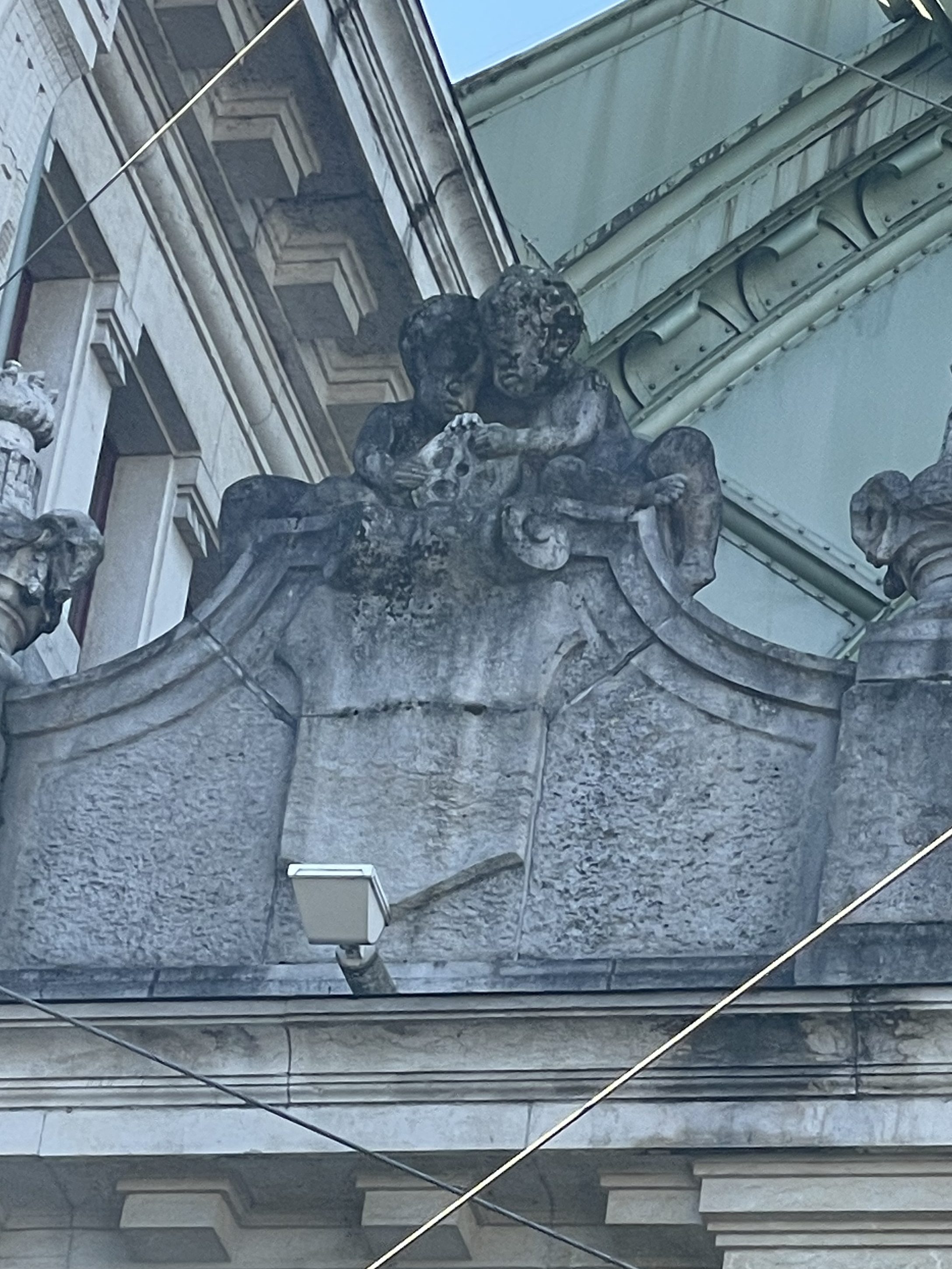
Curious about their origin and meaning, I looked into the station’s history. While I couldn’t find any definitive information about the sculptors, the statues themselves seemed to have a clear purpose. The children, often referred to as putti in art, were interacting with objects tied to railway work—wheels, goods, livestock—symbols of the station’s role in transporting people and cargo. The message seemed to highlight the railway’s ability to connect people and facilitate trade.
In 19th-(beginning of the 20th-) century architecture, children often symbolised innocence, curiosity, and optimism. At a station like Basel SBB, they likely represented the excitement and possibilities that travel offered, as well as the promise of a connected future. Their playful presence added a human touch to the otherwise functional and industrial environment, perhaps reminding travellers of home, family, and the connections waiting at their destination.

The architects, Emil Feasch and Emmanuel La Roche, may have simply included these statues as decorative elements to complement the station’s purpose. Yet their placement and design conveyed more than just aesthetic appeal. They seemed to embody the balance between the station’s practical role and its human element—welcoming travellers with a sense of warmth amidst the grandeur.
Looking back at the facade one last time before continuing my journey, I appreciated how much there was to learn simply by pausing to observe. Sometimes, a closer look reveals not only the craftsmanship of a building but also the ideas and values of the time in which it was built. For me, the statues at Basel SBB weren’t just decorative—they were a reminder of how travel connects us, not just to destinations but also to stories, history, and the people who shaped the places we pass through.
And so, as I walked away from the SBB Bahnhof, I glanced back one last time—not out of fear or of getting lost, but in gratitude for what I had found.
 I spy with my historical eye