Four years ago, when our oldest daughter was 6 years old, we moved to Switzerland. As a history and art lover, I worried if she would miss out on Dutch art and history. How would she be able to identify herself with our culture if she wasn’t taught in school? Dutch people always had to conquer water because they live below sea level. They went around the world to trade goods and money, not always in the most sensible way. If there was no teacher to start a subject like the second world war. How would my daughter be able to understand childhood stories of her grandparents? Her lack of the knowledge of Dutch history and art, became more important to me than her ability to write Dutch. I spent hours searching on the internet. I made it my hobby to search for references on children books. Figuring out if them had a topic that could be of any interest of one of my children. For me there were three things that would be important in the books. They should dare children to talk about the topics. Enthuse them for storytelling and have things to laugh about. That last quality makes you remember and has the ability to put things in perspective.
Then I came across a book called ‘Lang geleden…’ ( a long time ago…) which was written by Arend van Dam. He chose 50 meaningful topics from the Dutch history and wrote about them. It starts with hunters and collectors then goes on to fishermen and farmers. It talks about Kings and Queens but also about important figures like Rembrandt van Rijn and Michiel de Ruijter. He manages to tell each complex story in three pages with drawings to complete it. Every topic stands on its own, but still you want to continue to read the next one. I got enthusiastic about this writer. He makes difficult history topics easy to understand for kids by making them a tale.
Soon I found out that he wrote more than hundred books, mainly for children. The book ‘Voorbij de horizon’ ( behind the horizon) is about Europe, in which a child from every country tells a story. The last chapters are about what united Europe, as an example there is a story how countries work together or about the Eurovision song contest. Other books have stories of places around the world, or about Artists. Each book has about 50 stories in which the topic is covered. The idea is simple and at the same time so well thought out, in a language that children understand. Arend has the ability to tell stories.
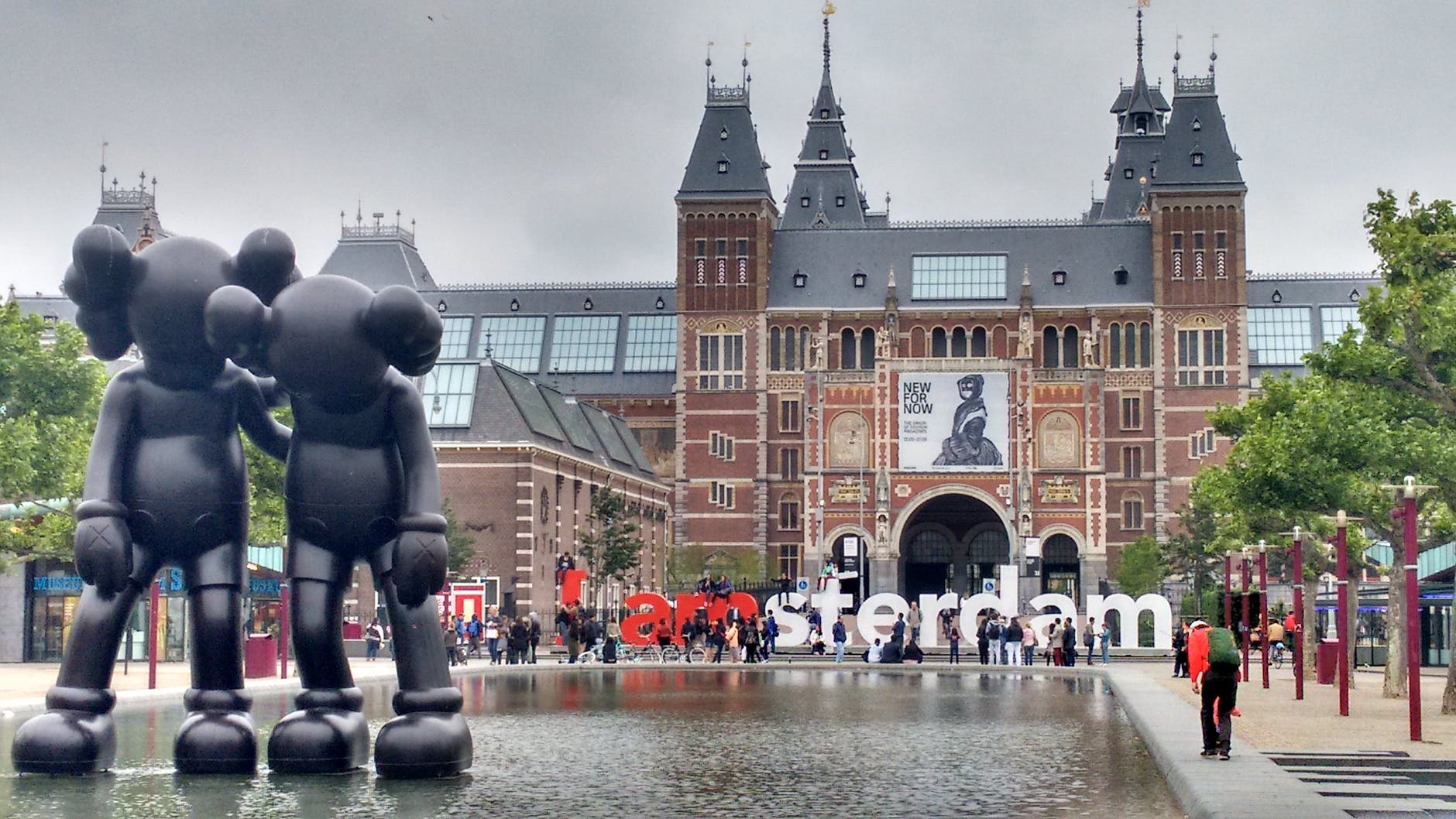
The more of his books I red with my daughters, the bigger admirer I became of him. He started as a social worker and learned from society. His father was a truckdriver and took him often along with him on his journeys. He says that’s why he likes traveling so much. By the time Arend himself became a father, he started to write for his child. Or actually for a lot more children, even for my children. You can feel that he loves story telling and just wants to share this. He also has the ability to talk about things that are important to understand at a young age. His latest book is about Slavery. Arend writes a story about the world exhibition in 1883, that took place in Amsterdam. A 60 year old former slave, Syntax Bosselman, travels from Surinam to Amsterdam. With a few other Surinamese with totally different background. They all were eager to joint this trip across the ocean. They were told that the Dutch king had invited them. For them it was like an adventure. As they arrived in Amsterdam, they found out that they were part of a Colonial and Export exhibition. They were exposed to over a million visitors, who came to Amsterdam’s Museumplein in the summer of 1883 . In the same book van Dam writes about historical stories of the period of slavery. From several points of view, we learn about the mind set of all the different characters. There is even a third story line in which he tells about he researched on each topic and how he came to the story. That last story line he writes like a journey between present and past on which I would love to go on.
Arend van Dam inspires me, it is the way he writes stories, so simple and still manages to make his point very clear. He uses subjects as persons, countries or historical events in his stories, which I think are important to tell. It is a pity that almost all of this books are only written in Dutch. There is one in English, it is about Dutch world heritage, ‘Exploring the Netherlands.’
To come back on my worries about my children not getting any connection with Dutch history. After more than four years in Switzerland and the help of Arend van Dam’s books I managed to tell my children what Dutch history is about. Of course my focus was on the Netherlands, but my children came across many more stories and identities. Living in Switzerland is making friends with Swiss, French, British, German, Italian, Portuguese, Ukraine, Albania and many more nationalities. I realise that my children will have a more European identity. In the book ‘Voorbij de horizon’ where the children from around Europe tell their stories, Arend puts it like this ’’we saw differences in the European countries but what the children we spoke had in common, is that they all wanted to matter, meet each other and become friends’. This is how my children will find their ‘European’ identity.
 I spy with my historical eye